
James Hoffman
95 Johnson Park Gets a Second Life: Inside the New Phoenix Theatre’s Restoration and New Apartments
The former New Phoenix Theatre building at 95 Johnson Park in Buffalo is being converted into residential units by Dyno Group's Chris Wan. This kind of adaptive reuse project adds housing supply while preserving the architectural character that makes Buffalo's older neighborhoods worth living in. Here's what the project looks like and why it matters to Western New York residents.
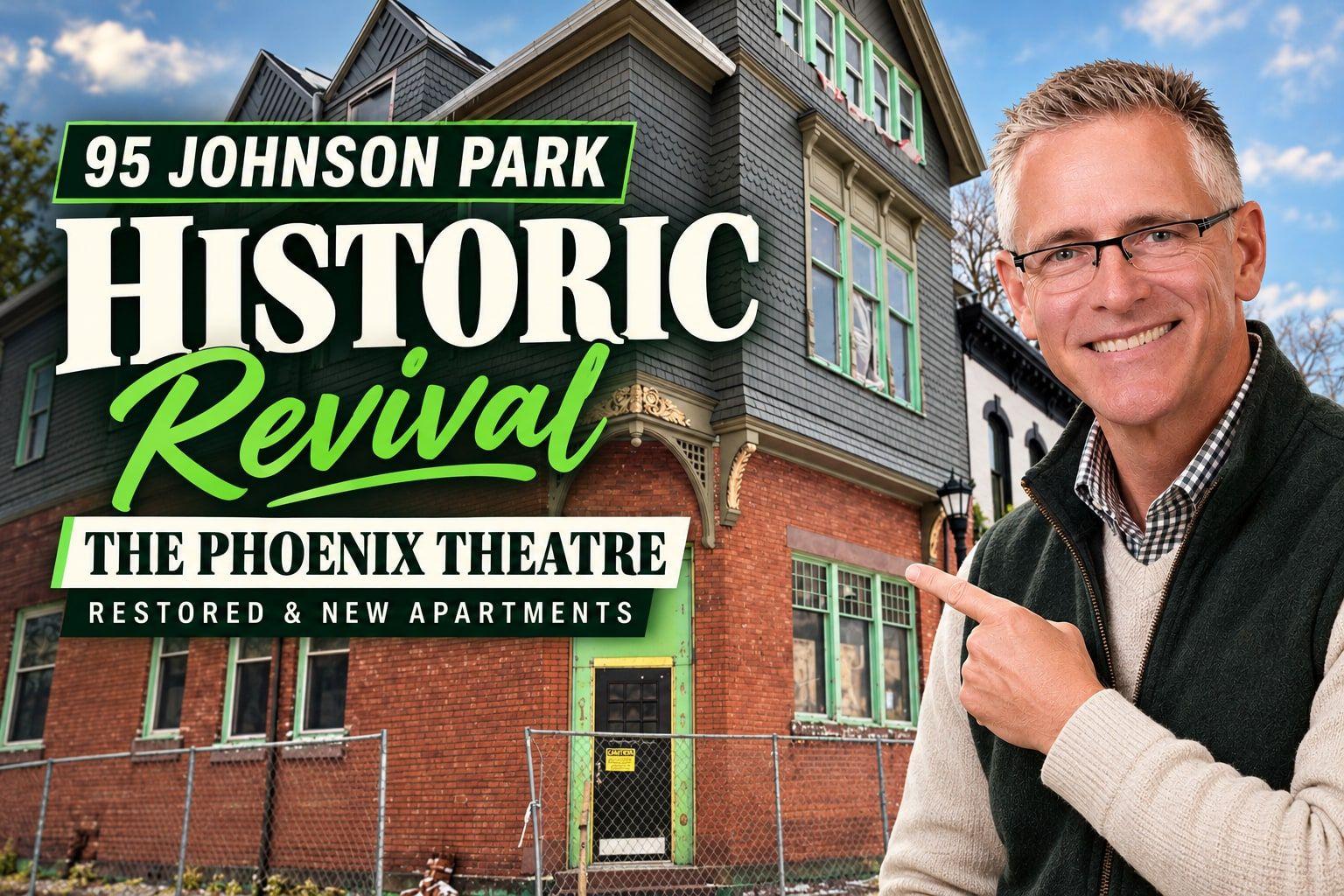
The 95 Johnson Park Buffalo renovation is one of the more interesting adaptive reuse projects in the region right now. Dyno Group's Chris Wan is converting the former New Phoenix Theatre building into residential units, turning a long-vacant cultural landmark into housing that Buffalo neighborhoods could use.
For anyone watching Western New York's development activity, this one is worth understanding.
What's Happening at 95 Johnson Park
The New Phoenix Theatre had a long run as a performing arts venue before the building went quiet. The 95 Johnson Park Buffalo renovation by Dyno Group takes that original theatre space and reimagines it as residential housing, preserving the historic structure rather than demolishing it.
Adaptive reuse projects like this one are increasingly common in cities with strong pre-war building stock. According to the National Trust for Historic Preservation, reusing existing buildings typically produces fewer carbon emissions than new construction and keeps neighborhood character intact in ways that ground-up development cannot replicate.
The Johnson Park corridor sits in a part of Buffalo where the building inventory has real age and character. Keeping structures like the former New Phoenix Theatre standing, and putting them back into productive use, matters for the fabric of the surrounding blocks.
What Adaptive Reuse Means for Buffalo's Housing Supply
Buffalo has a large inventory of older commercial and institutional buildings that no longer serve their original purpose. Converting them to residential use adds units without consuming green space and without requiring entirely new infrastructure. That is a practical advantage in a city with established utilities and transit already in place.
For buyers and investors watching Western New York, the 95 Johnson Park Buffalo renovation is a signal that parts of the city are attracting developers willing to take on complex, high-character projects. These conversions tend to draw attention to surrounding blocks, which can influence how nearby property owners think about their own buildings. If you own property near a corridor seeing this kind of investment and want to understand what it means for your home's value, Find out what your home is worth →
Investors considering Buffalo should note that adaptive reuse projects often carry historic tax credit opportunities, though the specifics of any individual project require guidance from a qualified accountant or tax professional, not a real estate agent.
Why Western New York Residents Should Pay Attention
• Adaptive reuse adds housing units without tearing down what makes older neighborhoods distinctive
• Projects like the 95 Johnson Park Buffalo renovation signal developer confidence in a corridor, which can affect surrounding property values
• Buffalo's pre-war building stock is a competitive advantage for the region, and conversions keep that stock in circulation rather than letting it deteriorate
• For buyers interested in one-of-a-kind spaces with architectural history, converted buildings like this one offer something new construction simply cannot
If you're exploring what's available in Buffalo or the surrounding suburbs, our communities page is a good starting point for getting oriented across Erie and Niagara Counties.
Projects like this one take years to complete and details shift as construction progresses, so anyone with a direct interest in units at 95 Johnson Park should track the project through Dyno Group directly. What we can say is that when a developer commits to a historic conversion of this scale, it tends to reflect something real about where a neighborhood is heading.
Tell us your budget, timeline, and priorities, and we will help you build a Amherst neighborhood shortlist.
Frequently Asked Questions
What is the 95 Johnson Park Buffalo renovation project?
The 95 Johnson Park Buffalo renovation is an adaptive reuse project led by Dyno Group's Chris Wan that converts the former New Phoenix Theatre building into residential housing. The project preserves the historic structure while creating new housing units in an established Buffalo neighborhood.
What is adaptive reuse and why does it matter for Buffalo?
Adaptive reuse means converting an existing building from its original purpose to a new one, rather than demolishing and rebuilding. For Buffalo, which has extensive pre-war commercial and institutional architecture, adaptive reuse keeps historic structures intact, adds housing supply, and can help stabilize surrounding property values.
How do historic renovation projects affect nearby home values in Western New York?
Significant investment in a historic building can draw attention to surrounding blocks and influence buyer and investor interest in a corridor. The effect on any individual property depends on location, condition, and broader market conditions. A local real estate professional familiar with the specific neighborhood can give you a more grounded read on what a nearby conversion means for your property.
Sources
• National Trust for Historic Preservation
Related reading
• Original Steve's Diner Coming to Williamsville in Early 2027 — Another Sign Main Street Is Thriving
• How Much Does a Home Appraisal Cost in Hamburg, NY?